

MONTHS AGO, I stumbled upon an intriguing interview between comedian Bryan Callen and filmmaker, writer and producer Adam Simon. The conversation covered a range of topics from the intelligence apparatus, propaganda, Hollywood, and covert military operations.
A particular segment of the interview caught my attention, echoing an insight I shared in an August 2024 Substack note about Hollywood film studios’ ongoing efforts to shift cultural norms away from traditional foundations in favor of what is framed as the “modern.” (Click below to read the full note.)
While discussing the inner machinations of Hollywood, Simon alludes to the reasoning behind the industry’s wholesale adoption of Woke, double-speak ideology, in the form of diversity, equity, and inclusion (DEI). He posits that the trend we see in Hollywood today — the urge to supplant historical and traditional views with ones laden with identity politics — is simply a strategic maneuver meant to appeal to both ends of the cultural divide.
His theory suggests that major film studios and streaming companies such as Warner Bros., Paramount Pictures, Universal Pictures, Walt Disney Studios, and Netflix — similar to political donors who donate to candidates on both sides of the political aisle — stake their investments into narratives that wield opposing messaging: some that prioritize and/or mandate DEI principles, and others that advocate for traditional and conservative principles:
“…So same thing in Hollywood, they’re saying like ‘Hey, we’re supporting these artists, look at us — we’re doing great!’ And on the flip side of that with Chappelle— what you’re seeing with Tom Brady — they do the same with Woke. They go on the other side of that and go ‘Oh my god, man, I don’t know what happened, we did the all female Ghostbusters and it just tanked. I don’t know what the fuck happened.’ That’s by design. It’s by design because they have to have losses. And so what better way than the motherfuckers that are picketing and protesting about diversity and inclusion and all this stuff, that we give them what they want so they will go away, because it fails. That’s why.”
While Simon’s reasoning may be rooted in some truth — who knows?! — it underestimates the ideological views of proponents of diversity, equity, and inclusion. It assumes that it is in their nature to humbly accept defeat when faced with the failures brought on by the policies they loudly champion — that is rarely ever the case. And it wrongly assumes that advocacy for diversity, equity, and inclusion, as it is often practiced, is not about the gradual accrual of power. Spoiler: it is.
American author and public speaker, James Lindsay vividly illustrates this power maneuver, otherwise known as an “entryism” tactic, by DEI proponents in a riveting Twitter/𝕏 thread. (I highly recommend pausing to read the thread in its entirety to fully grasp the severity of this unassuming tactic. Once you see it, you can’t unsee it; it’s pervasive.)

To those who champion diversity, equity, and inclusion, there is no such thing as failure or accountability. Instead, what follows an unsuccessful movement is a swift pivot toward another grievance that affords them the opportunity to avoid accountability while pursuing yet another “altruistic,” noble cause. For this crowd, as Lindsay’s popular aphorism goes, “The issue is never the issue, the issue is always the revolution.” That is to say the ultimate goal of any such movement is never truly about resolving the issue it claims to be advocating for; instead, it’s about the revolutionary chaos it can continuously stir up as it contends for both position and power.
This becomes clear with movements such as the Marxist cesspool that is Black Lives Matter, Defund the Police, third-wave feminism and its castigation of men, the normalization of the idea that men can be women, and vice versa, the toppling of historical statues, Hollywood’s obsession with remaking classics by infusing them with modern ideological views, the institutional legitimization of race hustlers such as Ibram X Kendi, Nikole Hannah-Jones, et al., whose antiracism crusade advocates for new discriminatory practices to replace past discrimination, and so many more. What all of these movements have in common is a wake of ruins; a general state of disrepair that is rarely ever deeply contended with, as they vie for cultural and institutional power.


It’s fair to say, then, that Simon’s reasoning — for why Hollywood film studios continuously appease the demands of activists who advocate for DEI measures — completely misses the mark. While he argues that the studios adopt these ideological measures into their films to prove that such projects are naturally doomed to fail at the box office, his analysis overlooks one key component: DEI is rampant across every institution and industry, not just Hollywood. And evidently, the initiative has not been set up to fail in those other sectors.
So what then is the underlying reasoning? Why have DEI measures become so pervasive, especially in an industry such as Hollywood?
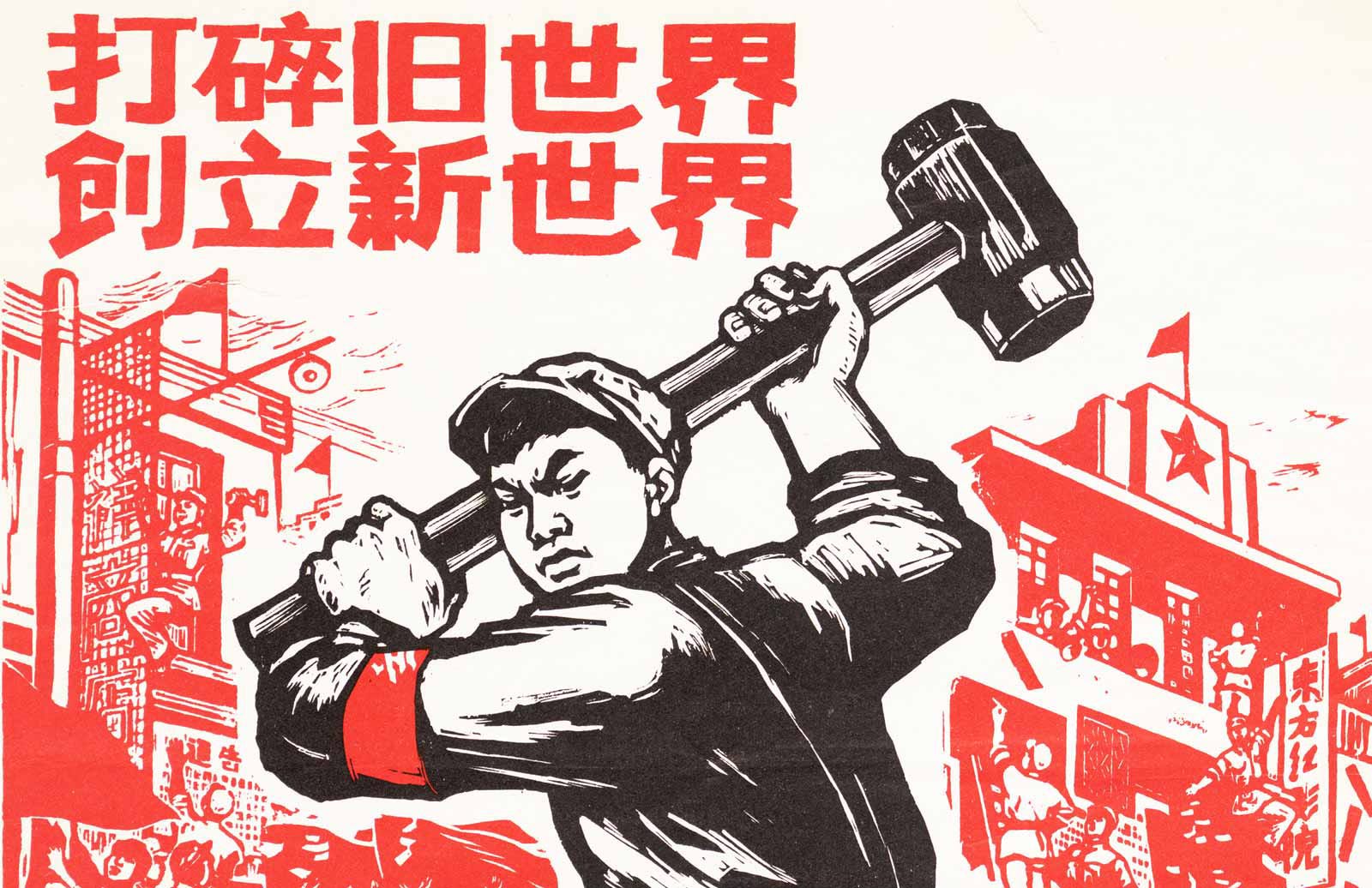
To answer that question requires some context from sixty years ago, during China’s Cultural Revolution under Chairman Mao Zedong. During this period, Mao set out to reassert his dominance over the Communist party. He influenced and mobilized Chinese youth to organize into militant paramilitary groups known as the Red Guards, whose sole mission was to restore social justice by purging perceived enemies of the revolution, destroying anything that represented the “Four Olds”: old culture, old ideology, old customs, and old traditions.
In essence, Mao and his Red Guards set out to destroy the old world, with a vision to establish a new world in its place. According to a Vox retrospective, “The idea was basically to tear down the vestiges of Imperial China and rewrite history centered around Mao Zedong — renaming buildings and streets, destroying cultural sites, and violently humiliating, and often torturing and murdering, anyone [intellectuals, teachers, clergymen] they accused of opposing Mao’s ideas.”
Mao and his Red Guards set out to destroy the old world, with a vision to establish a new world in its place.
That revolution ravaged China for a decade, leaving temples and historical sites destroyed, traditional clothing and books banned or burned, religious practices abolished and replaced with worship and iconography of Mao, and over a million people dead.
Today, DEI represents a rehash of Mao’s “Four Olds.” Now, cultural norms based on centuries of tradition must be destroyed, redefined, or purged to make way for new cultural norms recently established based on “social justice.” Old monuments deemed “racist” and “oppressive” must be toppled. Old books including languages or characters deemed “not inclusive” must be banned or replaced with new books that promote what is acceptable under the guidance of DEI. Old classics, in literature, films, and cartoons, must be reimagined with a more “representative” and “diverse” casting. Honor classes must be removed from schools because particular “students of color” are under-represented. Classic art pieces in museums must be protested for removal due to claims of racism or exclusion. The concept of what a “man” or “woman” is must become the subject of heated debate rather than a straightforward biological reality. Essentially, anything representing normalcy as we’ve historically and traditionally understood it must be overturned.
In Hollywood, this phenomenon — to destroy the old world and establish a new one founded upon social justice values — is apparent not only in the DEI quota policy introduced by entities such as the Oscars in 2020, but more notably in the remakes of classics and franchise projects that film studios such as Disney, Netflix, and more continue to produce. On the surface, moviegoing fans see (and complain about) Hollywood remakes and franchise projects that stray too far from the original. What they fail to realize is that these projects are the modern vessels through which new cultural norms must be laundered and normalized for a new generation.
It was never about film studios “having to have losses” in order to appeal to DEI proponents, as Simon suggested. Rather, it was about entryism: the infiltration of institutions with an ideological worldview, their takeover from within, and the production of outcomes dictated by newly established principles.
I don't think so. Mao thought it was important to shatter the old lines of authority in order to build a revolutionary society that could actually feed itself. He was definitely forcing people to be class conscious.
Today's DEI is designed to do the opposite. It is a propaganda campaign to preserve the old order, not to break it.
Big difference.
Excellent Commentary. Thank You.